
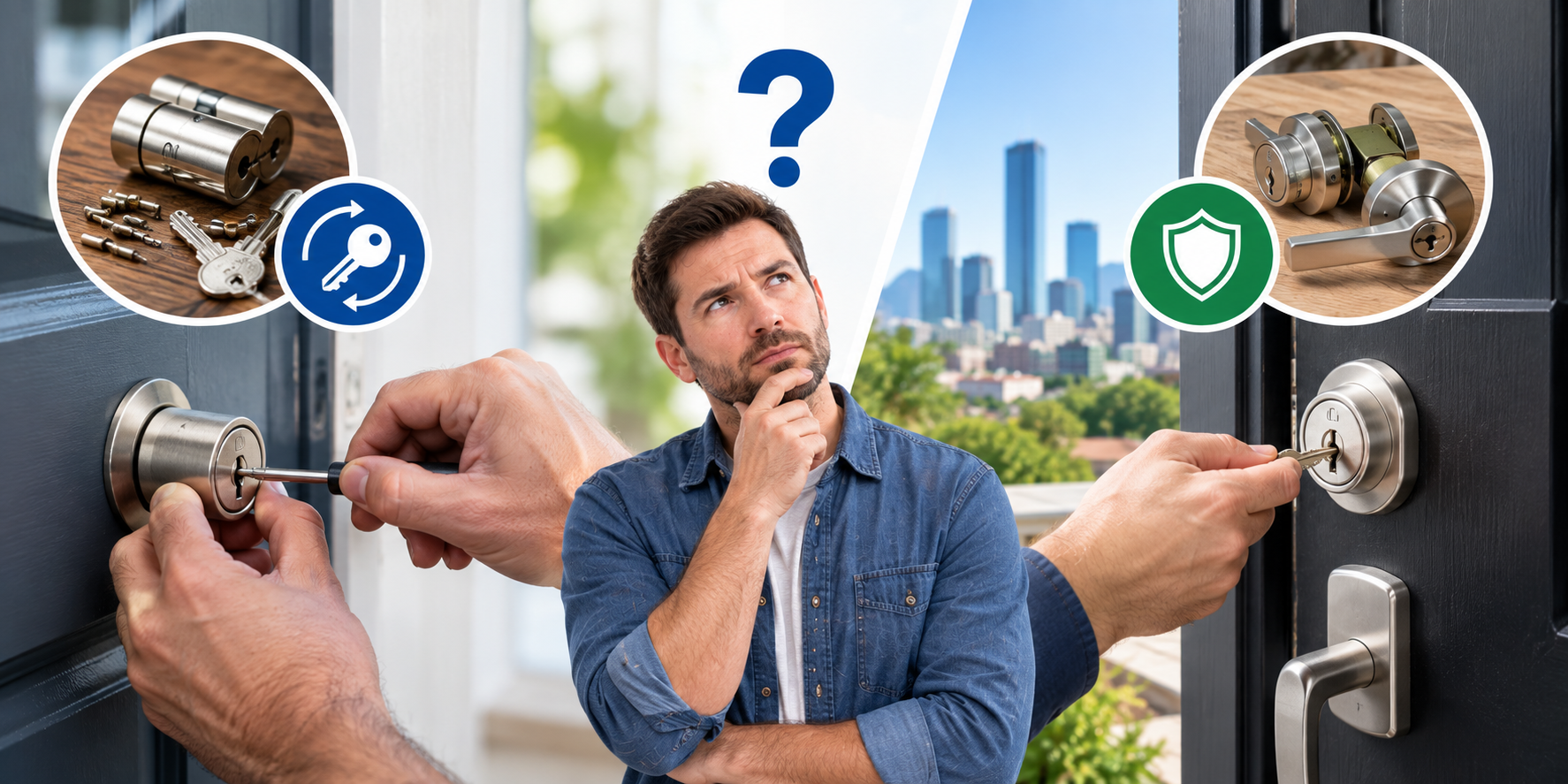
If you've ever had a locksmith situation where a key went missing, a move into a new home, or a tenant who left under less than ideal circumstances, someone might have mentioned rekeying. It may be that you have raised an eyebrow or that you have done research, but still do not realize how exactly this process differs from a lock replacement.
The differences between rekeying and replacing locks are queries raised every day among homeowners and renters living in Houston. This question is not as easy as it may seem since the wrong option can cost you either the loss of funds that you could have saved or the loss of security that you absolutely expected. EZ Lock &Key Assist deals with this question on a weekly basis while assisting people in Houston. This task can be accomplished if people have a clear idea about what these processes involve.
What Rekeying Actually Does And What It Doesn't
Rekeying is a mechanical process that changes the internal configuration of an existing lock cylinder without replacing the lock itself. Inside every pin-tumbler lock, there's a set of small spring-loaded pins arranged in a specific pattern. That pattern is what determines which key opens the lock. When a locksmith rekeys a lock, they remove the cylinder, replace those pins with a different arrangement, and cut a new key that matches the updated configuration.
The result: every key that previously worked on that lock, including any copies anyone has ever made, stops working. The new key is the only one that operates it. The hardware such as the deadbolt, the knob, the strike plate, all the physical components, stays exactly where it was.
What rekeying does not do is improve the security quality of the hardware. Rekeying only addresses key control; who holds a key that works. It does nothing to address hardware quality. Rekeying is the right answer when you trust the lock itself but not the key history around it. Lock replacement is the right answer when the hardware itself is the problem.
What Lock Replacement Does And When It's the Right Call
Lock replacement is exactly what it sounds like. The existing hardware comes out and new hardware goes in. The cylinder, the deadbolt body, the strike plate, all of it. The lock starts fresh with new internal components, new key, and whatever security grade and features the replacement hardware offers.
This matters most in three situations that rekeying cannot address.
The Hardware Is Worn or Damaged
Houston's heat, humidity, and Gulf Coast moisture are not kind to exterior lock hardware over time. A lock that's been on an exterior door for ten or fifteen years has been through thousands of key turns, significant temperature variation, and whatever salt air and humidity have done to the internal components. Cylinders develop play they didn't have originally. Springs weaken. The bolt doesn't extend as cleanly. When a lock is physically worn, rekeying it gives you key control but not a reliable function, and a lock that works inconsistently is both a security problem and a daily frustration.
The Current Lock Is Low Security
Most Houston homes were built with builder-grade lock hardware that meets the code minimum at the lowest cost. These deadbolts provide basic function but limited security. These locks can be picked, bumped, or defeated by forced entry. If the lock on your Houston front door has never been upgraded from builder-grade, rekeying it improves your key control but leaves the underlying security gap in place. Lock replacement with higher-grade hardware closes that gap.
You Want to Change the Physical Format
Some Houston homeowners use a lock situation as the right moment to switch formats entirely, moving from a traditional keyed deadbolt to a smart lock, or consolidating multiple locks that all use different keys onto a single keying system. These changes require hardware replacement. You can't rekey a traditional deadbolt into a smart lock.
Is Rekeying Cheaper Than Replacing Locks in Houston?
Yes, consistently and significantly. This is the part of the comparison that resolves it for most Houston homeowners.
Rekeying a standard residential deadbolt in Houston typically costs a fraction of full hardware replacement because the labor is shorter and there are no parts to purchase. A full lock replacement involves the cost of the new hardware itself, which ranges from modest to considerably more for Grade 1 or smart lock systems, plus the installation labor.
If your goal is simply to make sure the people who had keys to your home before you moved in can no longer get in, rekeying accomplishes that at the lowest possible cost. EZ Lock & Key Assist can rekey multiple locks in a single Houston home visit, often in under an hour, and the price is accessible for most budgets.
If the hardware genuinely needs to be upgraded, either because it's worn out or because you want better security, that investment is worth making, but it's a different situation with a different cost structure.
Hire EZ Lock & Key Assist for Rekeying and Lock Replacement in Houston, TX
EZ Lock & Key Assist has served Houston homeowners, renters, and property managers for several years. Whether the situation calls for a quick rekey at a new address, a full hardware upgrade on a home that's been using builder-grade locks for a decade, or an honest assessment of what your specific doors actually need, we give you a straight answer before any work begins and complete the job in a single visit.
We're licensed, insured, and available 24 hours a day for Houston locksmith calls of every kind. If you're not sure whether you need rekeying or replacement, that's exactly the kind of question we're glad to answer, over the phone, before you commit to anything.
Visit lockkeyassist.com or call EZ Lock & Key Assist directly. We're ready to help Houston homeowners make the right call the first time.